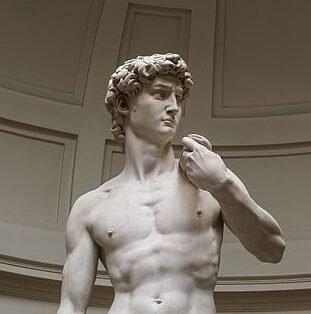
I saw the angel in the marble and carved until I set him free – Michelangelo
We often think growth is about becoming more. More accomplished. More skilled. More confident.
We imagine that if we keep adding, we’ll finally arrive — with greater presence, more worth, and deeper value to the people we love.
But what if growth isn’t about adding at all?What if it’s about uncovering what has been there all along?
Michelangelo once said: “I saw the angel in the marble and carved until I set him free.”
Perhaps the angel inside us is already whole. The real work is carving away the layers that hide it — the striving, the proving, the masks we’ve learned to wear.
And sometimes we hide, because it is what we learned to do when we were defenseless.
The Masks We Wear
Over the course of our lives, we build masks to protect ourselves — masks of perfectionism, of performance, of confidence, of constant control.
These masks form early, in moments when being ourselves felt unsafe. When we couldn’t ‘fail’, or be exhausted, or unhappy.
Take, for instance, the fear of failure. It often isn’t really about failing. Instead, it is the echo of moments when mistakes once meant rejection, embarrassment, or even the loss of love. Over time, those echoes harden into protective strategies: overachieving, avoiding risk, projecting certainty.
The irony is that the very masks we wear to cover our fears often create more anxiety than the fears themselves. They keep us running, performing, and proving — but never at rest. And to come to rest, or be forced to rest is a very dangerous place to be for the mask.
Subtraction as Transformation
True transformation happens not when we pile on more strategies, but when the unnecessary layers begin to dissolve.
When that happens, something surprising emerges:
- Clarity
- Purpose
- Vision
- Aliveness
- Curiosity
It isn’t about becoming someone new. It’s about remembering who you already are — without the layers of exhaustion, without the performance, free of the frames you were boxed into during your most vulnerable states.
Leaders who experience this often describe a rare and unexpected state: a quiet invincibility of the spirit. Not bravado, not force, but the strength that comes from alignment with what has always been true within them.
Voices Across Time and Cultures
This is not a new idea. Across centuries and cultures, voices have pointed to the same truth:
- Michelangelo: “I saw the angel in the marble and carved until I set him free.”
- Jung: “The privilege of a lifetime is to become who you truly are.”
- Lao Tzu: “He who conquers himself is mighty.”
- Nietzsche: “Become who you are.”
- Rumi: “Stop acting so small. You are the universe in ecstatic motion.”
Different words, different eras — but one message.
Becoming Ourselves
And here’s the tension: the longer we keep the mask in place, the more unease we feel about what’s underneath, because as Jung says it makes itself increasingly heard through our emotions.
Our longings, vulnerabilities, creativity, and contradictions ask us to let the masks go. But our performative lives relating to the world make it harder to. In this contradiction, anxiety, tension, and flatness surface — signals that something essential is being covered over.
Jaak Panksepp’s research into primal emotional systems shows the same. We are wired for play, care, grief, rage, and seeking. Masks mute these drives. We downplay play to seem serious. We hide grief to look strong. We override care to appear efficient. But our bodies know. That restless unease isn’t weakness — it’s life itself, pressing to be let through.
Whole-self work: carving gently
If the marble is the mask, then whole-self work is the carving.
But carving doesn’t mean attacking ourselves with judgment or force. As Bonnie Badenoch’s work on interpersonal neurobiology shows, real transformation happens in the presence of warm, steady attention — in relationships where the nervous system can soften, reorganize, and allow new possibilities to emerge.
Whole-self work invites us to:
- Notice the mask: What role am I performing right now? What am I hiding?
- Feel what arises when the mask loosens: fear, sadness, relief, even joy.
- Welcome emotions as signals of life, not intruders to be silenced.
- Rehearse new ways of being, bringing more of our authentic self into work, love, and play.
This is not about discarding every role. Some masks protect and serve us. The work is about freeing the “angel” within — the living, breathing presence that has always been there.
Why accompaniment matters
The paradox is that masks are formed in our relationships, its why we hide – for acceptance, love. And they are most convincing to the person wearing them. We rarely see how tightly we’ve fused with them until someone else — attuned, compassionate — helps us notice.
That’s why accompaniment matters. A coach or trusted guide offers:
- Awareness, shining a gentle light on what we can’t yet see.
- Accompaniment, staying with us when vulnerability feels too much to hold alone.
- Guidance, offering practices that build safety and curiosity so we can meet what’s inside without being overwhelmed.
Inner work isn’t about pushing harder. It’s about softening. It’s about finding the courage to let go — with someone steady enough to hold the space as we do.
Comments
One response to “The Angel Inside The Marble”
I felt a lot of discomfort reading this – emotions rising, and now mostly sadness. It makes sense now why I can’t be vulnerable. I’ve always been a hard worker, and im so resistant to taking a break that I would rather collapse than let myself rest and reset.